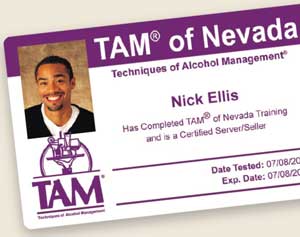
Call It What You May … Alcohol Awareness Card … Alcohol Education Card … Drink Card … But There’s Only One TAM Card!

Did you know that Nevada is one of only 18 states with mandatory alcohol awareness training required for service professionals? (Alcohol Policy Information System). Training classes and drink cards are required here for just about anyone who deals with the sale of alcohol on the job. It is important for service professionals to know the basics of the laws governing the training that they are required to take.

A business can face serious fines for not complying with alcohol education laws, so making sure your training is legit, and that you’re in compliance, is crucial. Service professionals often have a list of common concerns. Is my awareness program state-approved and does the training delivery and content meet state requirements? How often do I have to renew my card? And, taking it a step further, how do other states handle liquor sale laws and training? We’re happy to spill all the details!

In comparison with the rest of the United States, Nevada has relatively liberal alcohol laws. According to Wikipedia, “bars are permitted to remain open 24 hours, with no “last call”. Liquor stores, convenience stores and supermarkets may also sell alcohol 24 hours per day, and may sell beer, wine and spirits.” Local governments in Nevada may have more restrictive regulations than the state. Additionally, Nevada is one of only 10 states that does not impose dram shop liability – what that means is that a service professional or business that over-serves an intoxicated person cannot be held liable if that person injures themselves or someone else after leaving the bar. (Marin Institute). To compare and contrast Nevada’s laws regarding alcohol sales and service with those around the country, you can refer to this chart supplied by Wikipedia. Laws vary greatly not only by state, but sometimes from county to county, so a server should always be aware of the regulations where they are working or planning to work. TAM® provides you the scoop on the local regs whether you work in Clark County or in Sparks.

Given the liberal laws mentioned above, Nevada made a decision to ensure service professionals act as the gatekeepers to sales and service. Nevada’s approach ensures that a well-educated server is familiar with alcohol’s effects on the body and can recognize the dangerous signs of over-intoxication. Just because you cannot legally be held liable for over serving someone, does not mean that you are not morally responsible if someone gets killed or injured. Furthermore, a responsible server knows when to refuse a sale, and that can be one of the most important steps to preventing alcohol-related accidents and fatalities. You wouldn’t want your pharmacist to not be trained in the medications he prescribes you, so why not apply the same thought process to a bartender? Alcohol is a regulated substance too; those who dispense it should be trained about its effects.

Alcohol Awareness Training is required in Nevada Counties with a population of 400,000 or more for almost all service professionals. You can refer to the Nevada Legislature website to read the laws, and for details on who is governed by them. The Nevada Commission on Postsecondary Education is the agency charged with approving and regulating schools to provide alcohol awareness training. You should ALWAYS check with the Commission to see if a program you are considering is approved, a list of approved programs is available on their website.

For additional statistics and information on what to look for in a training program, you can read our blog post, “Did You Know That In Nevada Alcohol Education Cards Expire After Four Years?” For more information on beverage service training programs regulated around the country, you can refer to the Alcohol Policy Information System provided by the NIAAA.

There are several providers out there of credible and effective alcohol awareness training, but TAM® of Nevada is the only authorized provider of the TAM card®. TAM® of Nevada has been an approved provider of alcohol awareness education and a provider of alcohol education cards for more than 25 years, and we hope to continue educating Nevada’s sales professionals for a long time to come!

Are you compliant with Nevada’s alcohol and hospitality laws? Do you think Nevada should be doing more to regulate sales and service?

Resources

© 2011 National Hospitality Institute®, TAM® of Nevada

Casino Security – Suspicious Activity to Watch For

As a security guard, one has to be aware of their surroundings at all times. The job at hand is to maintain the safety and security of the staff and patrons of an establishment, and to diffuse any potentially hazardous or disruptive situation before it can happen. But, what about taking on this job in a uniquely challenging setting like a casino? Casinos have their own set of security concerns to contend with including large crowds of people, large sums of money being passed around and also kept on site, and the risks that accompany any situation with alcohol present (including rowdy patrons and relaxed inhibitions). And, as one would expect, there will always be people who will try to cheat at gambling.

It takes a certain amount of skill and finesse to maintain order in a casino. There are many types of sophisticated security and monitoring systems in place in casinos, and they vary from location to location. We all know about the ‘eyes in the sky’, and different establishments are constantly introducing additional security measures to stay one step ahead of the cheats. Even given the sophisticated level of technology available today, it doesn’t mean security professionals on the floor can relax and go on autopilot.

Famous cheaters such as Richard Marcus will tell you that in their opinion, technology currently being used won’t stop cheaters in their tracks. According to Marcus, “technology is still only as good as the casino’s workers, whom he fooled for years. If cheaters don’t draw too much attention to themselves, quickly getting onto and then away from the table, it’s unlikely their records will be checked.” (CNET News).

Given this, one must continue to watch for suspicious behavior, your eyes, ears and instincts will always be the best tools for the job. Here you’ll find information on different examples of suspicious or disruptive activity to watch out for.

Cheaters never prosper, and your job as a security guard is to make sure they don’t get away with it. Scammers are always finding new ways to cheat at casinos and in gambling, so it is incredibly important for security professionals to remain alert and stay up-to-date about new types of scams – your employer will tell you what they want you to watch for. In addition to what you’ll learn from your employer or security training program, keep an eye out for patrons who look overly nervous, sweaty or shifty eyed. Most cheaters get caught because they are easy to read, and if not, you can also catch them when they get greedy; an unusual pattern of excessive winning may be more than just luck.

The variety of scams used to cheat are far too numerous to list here. For a succinct list of some of the most popular scams employed in Vegas casinos, you can refer to Vegas Chatter’s article, “The Most Popular Ways To Cheat in Vegas.” Once you’re familiar with some of the more common dupes and how to spot them, you are on your way to becoming a formidable security professional.

However, one should be aware that it’s not just cheaters and thieves that need to be managed in a casino setting; security professional needs to be on the lookout for disruptive patrons, rowdy drunks, and even dishonest employees.

No one likes to lose money, but look out for those who become overly combative or upset. Stress can make people do senseless things, and anyone who will argue with or become rude to a dealer or another player should be watched carefully to make sure they don’t take out their anger in an inappropriate way. One angry or disruptive patron at a gaming table can have an effect on their other patrons at the table that might choose to play elsewhere.

As mentioned, it’s not just players and patrons a security guard should watch, casino employees should be observed as well. Casinos have all types of procedures in place to first hire honest and trustworthy individuals, and then to them from participating in scams or skimming off the top. However, you’ll always find the occasional bad seed, so be alert for employees skimming casino chips, or those who partner up with guests to help steal personal items like checked coats or purses. Ronald Petyak, a police official reporting to Pennsylvania casino officials on security measures in 14 of the state’s casinos recently said, “theft by casino employees is one of the most prevalent forms of theft, and the hardest to detect. More employee theft has been documented than theft by patrons.” He said one employee of a Connecticut casino was “caught placing $97,000 [in casino funds] in his socks.” (Pittsburgh-Post Gazette via SecurityInfoWatch.com).

As a security professional, one must always remain vigilant. Read more about the recent 1.5 million dollar heist perpetrated at the Bellagio Casino in our recent blog article, “Are You Concerned About Recent Rash of Casino Robberies?” What types of scams or suspicious behavior have you witnessed while working as a security guard? What tips would you give to someone looking to work as a security professional in Las Vegas?

Resources

CNET News – Technology Can’t Beat Us, Casino Cheat Says

Vegas Chatter – The Most Popular Ways To Cheat in Vegas

Security Info Watch – Experts Tell Penn. Gaming Panel How to Spot, Avoid Casino Cheating

© 2011 National Hospitality Institute®, TAM® of Nevada

Love Is in the Air! Are You Ready for Your Valentine’s Day Guests?

Ask any seasoned restaurant professional and they will tell you Valentine’s Day is one of the busiest restaurant nights of the year (with Mother’s Day, New Year’s Eve and the day before Thanksgiving rounding out the contenders). Valentine’s Day (February 14th) is right around the corner, and you can expect to see bars, restaurants and hotels looking to capitalize on the holiday by stretching the festivities out through the weekend and through the holiday.

If you’re planning to work on this most important date-night, it presents a great opportunity to make a king’s ransom in tip money, and wow your guests at the same time. Your guests are already guaranteed to be in a happy, celebratory mood as soon as they sit down, you can help elevate their night-out even further with some extra attention and a few simple suggestions to make it extra special.

First, why not suggest a romantic or Valentine’s-Day themed cocktail to start out with? For a classy, traditional drink to celebrate the occasion, you can always recommend a good bottle of champagne or a classic martini. Make sure to be knowledgeable about different champagnes you have on hand, this is one of the most popular celebratory drinks, and knowing the nuances of which bottles you have available demonstrates your knowledge and capability as a bartender or server. If you’d like to recommend a fun, fruity cocktail, here are a few suggestions:

The Bitter Crush (Epicurious.com).

  • Crushed ice
  • 2 ounces (1/4 cup) Aperol (bitter orange aperitif)
  • 1 1/2 ounces (3 tablespoons) white rum
  • 1 teaspoon fresh lemon juice
  • 2 dashes orange bitters
  • 1/2 to 1 teaspoon sugar
  • Garnish: 1 (1 1/2-inch-long) lemon twist

Fill an 8- to 10-ounce highball glass with crushed ice. Stir together Aperol, rum, lemon juice, and bitters in a small glass measuring cup. Add sugar to taste, stirring until sugar is dissolved, then pour over ice.

The Be Mine Mojito (Recipe by Bridget Albert for Oprah.com).

  • 1 1/2 ounces Bacardi Razz (white rum optional)
  • 1 ounce simple syrup
  • 1/2 lime , freshly squeezed
  • 12 to 14 fresh mint leaves
  • 4 raspberries
  • 4 blackberries
  • Sprig of mint

In a tall glass, lightly muddle the lime juice, 3 raspberries, 3 blackberries, simple syrup and mint leaves. The trick is to muddle just enough to release the oils from the mint leaves while leaving them intact. Add crushed ice and rum, and top with soda. Stir until the outside of the glass begins to frost. Garnish with the leftover berries speared with a mint sprig.

For even more love-themed cocktail recipes, check out Alissa Ponchione’s article, “Elixirs of Love“.

Next, go out of your way to make the evening extra special for your patrons. Find out if your establishment is doing anything special for guests (prix-fixe celebratory menus, live music, floral arrangements waiting for each guest, etc.) and let your guests know about these extras. Some establishments make special arrangements with visitors when they call to make reservations, such as having a special table reserved or having a bottle of champagne on ice waiting for them. Before greeting your table, check with the hostess or whoever seats guests to find out if there are any special arrangements you should be aware of.

You can also make someone’s evening with just a little extra kindness – why not offer to take your guests’ picture or bring a rose to each of the ladies you wait on? A little extra effort can go a long way.

Finally, be knowledgeable about several of the parties and events going on around town this weekend; your guests will certainly appreciate your ability to make recommendations on after-parties, places to go to after dinner, or any hotel/spa packages being offered around the casinos. For more information on Valentine’s-themed spa treatments available around the city, check out Jeannie Borbe’s article for Lights Vegas Action. Vegas.com has released a comprehensive list of Valentine’s Day-themed special events around the city; you can find that article here.

As a service professional, one should recognize a holiday like Valentine’s Day as an opportunity to provide superior service and make a lasting impression on guests and diners. Is your establishment doing anything special to celebrate Valentine’s Day this year? Are you planning to work this weekend?

Resources

Lights Vegas Action – Fall in Love with These Valentine’s Day Spa Treatments

Vegas.com – Valentine’s Day in Vegas!

Epicurious – Bitter Crush

Oprah.com – Be Mine Mojito

Nightclub & Bar – Elixirs of Love

© 2011 National Hospitality Institute®, TAM® of Nevada
The Health Department Is on the Lookout – Are You in Their Sights?

Do you make sure to always use proper hand-washing procedures at work? What about making sure that dirty dishes don’t pile up in the sink? Service industry professionals and dining establishments alike have a responsibility to make sure their places of business are clean for the health and safety of their staff and customers. Nothing can tarnish the reputation of an establishment more than a poor letter grade, a shutdown from the health department, or a rash of food-borne illnesses linked back to your business. When customers stay away, servers and bartenders lose out big on income and tips. So, it is in your best interest to make sure you are promoting a healthy establishment.

Businesses everywhere need to practice cleanliness and sanitation, but Nevada in particular does an excellent job of staying on top of the issue. KTNV ABC Action News 13 recently ran a report on the poor cleanliness practices at HK Star, a restaurant in Las Vegas’ Chinatown district, which would make just about anyone think twice about dining out. According to KTNV, the restaurant, “recently received 32 demerits and a “C” grade after a visit from the Southern Nevada Health District.” (KTNV News). Their violations ran the gamut from improper hand washing techniques by their employees, to meat left out to defrost at room temperature. Since the report, HK Star has made some changes and brought their status back up to an “A” grade, but the damage to their reputation may already be done. Would you want to eat out somewhere that historically employed lax cleaning procedures? To read KTNV’s report and learn about other restaurants covered in their ‘Dirty Dining’ section, please refer to their article, “Dirty Dining: HK Star.”

In Las Vegas, the South Nevada Health District reserves the right to drop in at any time for a surprise inspection. With that in mind, make sure you’re always doing your best to stay compliant with rules and regulations. Use common sense when it comes to cleanliness, and follow any guidelines set out by your employer.

Here are some easy to follow guidelines:

  • If you work in a food-serving establishment, make sure you have a Food Handler Health Card issued by the Southern Nevada Health District. For more information on Health cards, refer to the Southern Nevada Health District website. Also make sure you have your alcohol awareness card, you can easily obtain one from TAM of Nevada. Both of these are requirements for anyone who works in an establishment which sells food and/or alcoholic beverages. Be aware that the Southern Nevada Health District can ask to see your cards at any time, and can cite you for non-compliance.
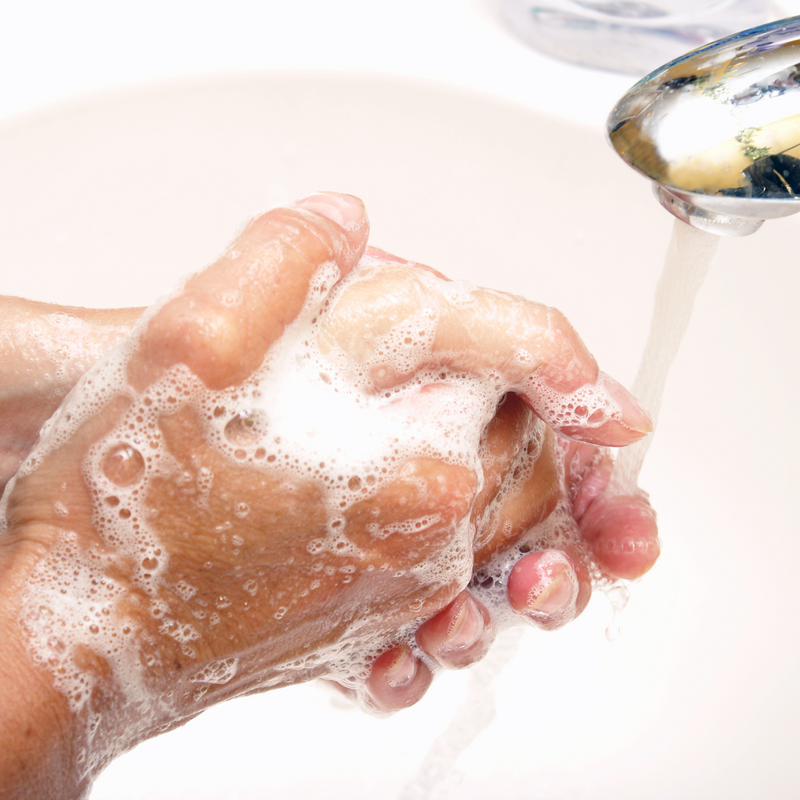
  • Always wash your hands thoroughly after using the restroom, before and after handling any raw food products, after clearing a table or taking out the trash, after sneezing or coughing, or any time after you touch something which isn’t sanitized. For instructions on proper hand washing techniques, refer to the CDC’s article, “Clean Hands Save Lives”.
  • Keep your fingernails clean and neatly trimmed.
  • If you have long hair, tie it back to avoid having it get into food or beverages.
  • Make sure food and food storage containers are properly labeled and dated. Discard any food items which are past expiration.
  • Look around and make sure all areas in the kitchen and common areas are clean and tidy. Utensils and storage containers should all be in their place, work surfaces should be wiped down, and trash containers should be emptied regularly. It only takes a minute to clean up clutter.

To learn more about South Nevada Health District’s rules and regulations for food serving and other public establishments please refer to the SNHD’s Food Establishments Regulations. And, to learn more on just how those A, B, and C grades are handed out, refer to the Las Vegas Review Journal’s concise article, “Restaurant Inspections Protect the Public.” Proper cleaning and safety practices are everyone’s job. What steps do you take to make sure you’re doing your best in cleanliness, sanitation, and public health?

Resources:

© 2011 National Hospitality Institute®, TAM® of Nevada