

You’re Hired! Landing a Job in the Hospitality Industry

We all know the economy is tough right now, and the job market is competitive. However, this year things are slowly starting to turn around, and we can all breathe a little easier. According to the Nevada Department of Employment, Training & Rehabilitation and Clark County Comprehensive Planning, five of the eight largest employers in Clark County are in the hospitality industry, great news for those looking to get hired. (Clark County, NV).

For dedicated job searchers, it helps to stay ahead of the pack and use all of the resources available to you if you want to land a great job in a tight market. In this day and age, it’s not enough to look through the ‘Help Wanted’ section in the newspaper. Employers are using job search websites, word of mouth, and social media tools to reach potential candidates, and connecting has never been easier. Here are a few sites that will help you to jump start the search for your next hospitality career!

Job Listing Websites – There are jobs out there, you just have to know where to look. A great first step is doing a job search on any number of reputable employment websites. Sites like Nevada Job Connect and Recruiting Nevada are great for finding Nevada-area careers. Also check national sites like Monster and Indeed for additional listings, and industry specific sites like Hospitality Job Site. Also, if there is a particular company you want to work for, but sure to check their company website. Casinos, restaurants and clubs often have sections on their websites dedicated to employment listings, and this is one of the first places you’ll find out about available positions.

Social Media Networks – Many employers are now using Twitter, Facebook, LinkedIn and even YouTube to reach out to candidates. If you use Twitter or Facebook, make sure to ‘follow’ or ‘like’ companies you would be interested in working for, and watch for updates. Also, consider connecting with TAM ® of Nevada as we often rebroadcast any job postings or casting calls that we feel may be of interest to those in the hospitality or beverage industry on Twitter and Facebook. There are many individuals and organizations on popular social media platforms that focus on broadcasting job alerts, so you want to make sure to get out there and network socially. Let your social circle know you are looking for work, and don’t be afraid to reach out to others to help with the search; word of mouth can be invaluable.

Industry Websites and Blogs – It’s a great idea to stay up-to-date on what’s going on in your industry while you’re searching. Visiting hospitality industry blogs and websites will keep you in the loop with updates on what’s new in your industry and local area. Sites like Vegas Chatter are great for learning about new restaurant and bar openings in Las Vegas; you can easily get a heads up on who might be hiring new workers. Also check blogs like Hospitality Job Site’s blog or sites like Nightclub & Bar for tips and industry news.

Searching for a great position that you’ll enjoy and excel in can be a daunting process, but having the right tools to help you get started can greatly boost your chances of success. What are your favorite sites when searching for a job?

Resources

© 2011 National Hospitality Institute®, TAM® of Nevada

Keep Things Safe, Don’t Over Serve – Warning Signs a Guest May Be Becoming Intoxicated

Servers, bartenders and anyone else responsible for service and sale of alcoholic beverages has a very important job on their hands… knowing how to spot an inebriated guest, and knowing when to intervene. As a server, it’s important to make sure that your guests and patrons are having an enjoyable time, are served exactly what they ordered, and remain respectful of the establishment and others. On top of all of this, it’s imperative to watch for any warning signs that they may be intoxicated. As such, a bartender or server should always be closely monitoring their guests.
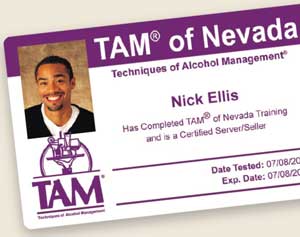

To learn the warning signs to watch out for take the Techniques of Alcohol Management (TAM)® course offered by TAM® of Nevada.

Good judgment, a strong moral compass and knowledge of the Techniques of Alcohol Management (TAM)® are all crucial qualities in a service professional; we have a strong obligation to make sure guests are well taken care of, and can make it home safely without injuring themselves or others.

What warning signs do you watch for when you are working? How do you handle situations involving intoxicated patrons?

© 2011 National Hospitality Institute®, TAM® of Nevada

Call It What You May … Alcohol Awareness Card … Alcohol Education Card … Drink Card … But There’s Only One TAM Card!

Did you know that Nevada is one of only 18 states with mandatory alcohol awareness training required for service professionals? (Alcohol Policy Information System). Training classes and drink cards are required here for just about anyone who deals with the sale of alcohol on the job. It is important for service professionals to know the basics of the laws governing the training that they are required to take.

A business can face serious fines for not complying with alcohol education laws, so making sure your training is legit, and that you’re in compliance, is crucial. Service professionals often have a list of common concerns. Is my awareness program state-approved and does the training delivery and content meet state requirements? How often do I have to renew my card? And, taking it a step further, how do other states handle liquor sale laws and training? We’re happy to spill all the details!

In comparison with the rest of the United States, Nevada has relatively liberal alcohol laws. According to Wikipedia, “bars are permitted to remain open 24 hours, with no “last call”. Liquor stores, convenience stores and supermarkets may also sell alcohol 24 hours per day, and may sell beer, wine and spirits.” Local governments in Nevada may have more restrictive regulations than the state. Additionally, Nevada is one of only 10 states that does not impose dram shop liability – what that means is that a service professional or business that over-serves an intoxicated person cannot be held liable if that person injures themselves or someone else after leaving the bar. (Marin Institute). To compare and contrast Nevada’s laws regarding alcohol sales and service with those around the country, you can refer to this chart supplied by Wikipedia. Laws vary greatly not only by state, but sometimes from county to county, so a server should always be aware of the regulations where they are working or planning to work. TAM® provides you the scoop on the local regs whether you work in Clark County or in Sparks.

Given the liberal laws mentioned above, Nevada made a decision to ensure service professionals act as the gatekeepers to sales and service. Nevada’s approach ensures that a well-educated server is familiar with alcohol’s effects on the body and can recognize the dangerous signs of over-intoxication. Just because you cannot legally be held liable for over serving someone, does not mean that you are not morally responsible if someone gets killed or injured. Furthermore, a responsible server knows when to refuse a sale, and that can be one of the most important steps to preventing alcohol-related accidents and fatalities. You wouldn’t want your pharmacist to not be trained in the medications he prescribes you, so why not apply the same thought process to a bartender? Alcohol is a regulated substance too; those who dispense it should be trained about its effects.

Alcohol Awareness Training is required in Nevada Counties with a population of 400,000 or more for almost all service professionals. You can refer to the Nevada Legislature website to read the laws, and for details on who is governed by them. The Nevada Commission on Postsecondary Education is the agency charged with approving and regulating schools to provide alcohol awareness training. You should ALWAYS check with the Commission to see if a program you are considering is approved, a list of approved programs is available on their website.

For additional statistics and information on what to look for in a training program, you can read our blog post, “Did You Know That In Nevada Alcohol Education Cards Expire After Four Years?” For more information on beverage service training programs regulated around the country, you can refer to the Alcohol Policy Information System provided by the NIAAA.

There are several providers out there of credible and effective alcohol awareness training, but TAM® of Nevada is the only authorized provider of the TAM card®. TAM® of Nevada has been an approved provider of alcohol awareness education and a provider of alcohol education cards for more than 25 years, and we hope to continue educating Nevada’s sales professionals for a long time to come!

Are you compliant with Nevada’s alcohol and hospitality laws? Do you think Nevada should be doing more to regulate sales and service?

Resources

© 2011 National Hospitality Institute®, TAM® of Nevada

Casino Security – Suspicious Activity to Watch For

As a security guard, one has to be aware of their surroundings at all times. The job at hand is to maintain the safety and security of the staff and patrons of an establishment, and to diffuse any potentially hazardous or disruptive situation before it can happen. But, what about taking on this job in a uniquely challenging setting like a casino? Casinos have their own set of security concerns to contend with including large crowds of people, large sums of money being passed around and also kept on site, and the risks that accompany any situation with alcohol present (including rowdy patrons and relaxed inhibitions). And, as one would expect, there will always be people who will try to cheat at gambling.

It takes a certain amount of skill and finesse to maintain order in a casino. There are many types of sophisticated security and monitoring systems in place in casinos, and they vary from location to location. We all know about the ‘eyes in the sky’, and different establishments are constantly introducing additional security measures to stay one step ahead of the cheats. Even given the sophisticated level of technology available today, it doesn’t mean security professionals on the floor can relax and go on autopilot.

Famous cheaters such as Richard Marcus will tell you that in their opinion, technology currently being used won’t stop cheaters in their tracks. According to Marcus, “technology is still only as good as the casino’s workers, whom he fooled for years. If cheaters don’t draw too much attention to themselves, quickly getting onto and then away from the table, it’s unlikely their records will be checked.” (CNET News).

Given this, one must continue to watch for suspicious behavior, your eyes, ears and instincts will always be the best tools for the job. Here you’ll find information on different examples of suspicious or disruptive activity to watch out for.

Cheaters never prosper, and your job as a security guard is to make sure they don’t get away with it. Scammers are always finding new ways to cheat at casinos and in gambling, so it is incredibly important for security professionals to remain alert and stay up-to-date about new types of scams – your employer will tell you what they want you to watch for. In addition to what you’ll learn from your employer or security training program, keep an eye out for patrons who look overly nervous, sweaty or shifty eyed. Most cheaters get caught because they are easy to read, and if not, you can also catch them when they get greedy; an unusual pattern of excessive winning may be more than just luck.

The variety of scams used to cheat are far too numerous to list here. For a succinct list of some of the most popular scams employed in Vegas casinos, you can refer to Vegas Chatter’s article, “The Most Popular Ways To Cheat in Vegas.” Once you’re familiar with some of the more common dupes and how to spot them, you are on your way to becoming a formidable security professional.

However, one should be aware that it’s not just cheaters and thieves that need to be managed in a casino setting; security professional needs to be on the lookout for disruptive patrons, rowdy drunks, and even dishonest employees.

No one likes to lose money, but look out for those who become overly combative or upset. Stress can make people do senseless things, and anyone who will argue with or become rude to a dealer or another player should be watched carefully to make sure they don’t take out their anger in an inappropriate way. One angry or disruptive patron at a gaming table can have an effect on their other patrons at the table that might choose to play elsewhere.

As mentioned, it’s not just players and patrons a security guard should watch, casino employees should be observed as well. Casinos have all types of procedures in place to first hire honest and trustworthy individuals, and then to them from participating in scams or skimming off the top. However, you’ll always find the occasional bad seed, so be alert for employees skimming casino chips, or those who partner up with guests to help steal personal items like checked coats or purses. Ronald Petyak, a police official reporting to Pennsylvania casino officials on security measures in 14 of the state’s casinos recently said, “theft by casino employees is one of the most prevalent forms of theft, and the hardest to detect. More employee theft has been documented than theft by patrons.” He said one employee of a Connecticut casino was “caught placing $97,000 [in casino funds] in his socks.” (Pittsburgh-Post Gazette via SecurityInfoWatch.com).

As a security professional, one must always remain vigilant. Read more about the recent 1.5 million dollar heist perpetrated at the Bellagio Casino in our recent blog article, “Are You Concerned About Recent Rash of Casino Robberies?” What types of scams or suspicious behavior have you witnessed while working as a security guard? What tips would you give to someone looking to work as a security professional in Las Vegas?

Resources

CNET News – Technology Can’t Beat Us, Casino Cheat Says

Vegas Chatter – The Most Popular Ways To Cheat in Vegas

Security Info Watch – Experts Tell Penn. Gaming Panel How to Spot, Avoid Casino Cheating

© 2011 National Hospitality Institute®, TAM® of Nevada