Who Can You Legally Refuse to Serve or Ask to Leave? Know Your Rights!

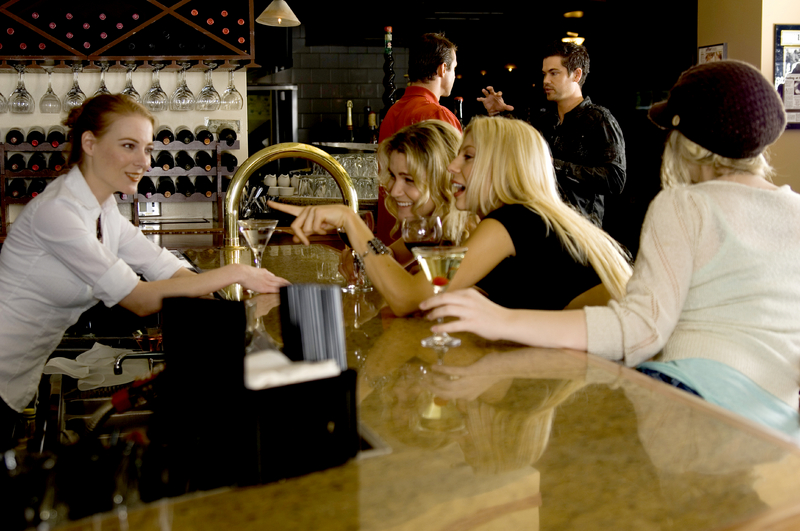
Every service professional dreads having to cut off a belligerent customer; it’s almost a rite of passage that every server or bartender must go through in their career. But, what happens if you need to refuse service for another reason? Who can you legally refuse to serve or ask to leave? Not only are the laws regarding right to refuse service complicated and varied by location, but private businesses can have their own additional rules and regulations. Complicated as it can be, it’s important that you know your rights. Beverage alcohol is a regulated substance and society has placed a significant responsibility on the server to dispense it properly.

First, let’s get the obvious out of the way. In Nevada, you have a legally protected right to evict from your premises, “anyone who acts in a disorderly manner, or who destroys the property of any such owner or keeper, or who causes a public disturbance in or upon such premises.” (Source: Nevada Legislature).

Given this, there are a number of legitimate situations in which an establishment can refuse service, including, but not limited to:

  • drunkennessPatrons who are excessively rowdy or harassing other customers.
  • Binge drinkers, over-consumers and already intoxicated individuals.
  • Patrons that would overfill legal capacity if let in.
  • Patrons accompanied by large groups of non-paying customers who will fill up excessive space that could be used by other paying customers.

However, beyond this things start to get tricky. As a matter of law, you must always respect people’s civil rights. It is against the law to deny service based on protected classes such as “race, color, religion, national origin, disability or sexual orientation.” (Source: Nevada Legislature). Additionally, Nevada law mandates that you cannot refuse service to a person who requires the assistance of a service animal such as a seeing-eye dog. (Source: Nevada Legislature). Outside of any type of discrimination, within a private business establishment such as a bar or casino, it is up to the establishment’s discretion who they do and do not do business with.

Remember, bartenders and servers need to be concerned not only with the behavior or state of their direct customer, but how they can effect or interact with others around them. For example, it could be dangerous to allow a small child to linger in a bar or casino – what if they were knocked over by someone carrying a tray of drinks or caught in the crosshairs of a bar fight? In Nevada, a business that sells alcoholic beverages can be fined for allowing a minor to linger in the building. People have been escorted out of establishments for all types of unique situations including:

  • Excessive personal hygiene issues (foul body odor).
  • Minors in the company of adult caretakers in a bar or pub area.
  • Pregnant women in a rowdy bar or pub area.

What does this mean for you? Always check your employee handbook or company policies regarding refusal of service to see how your employer handles these types of situations. You need to be aware of both company policies and laws specific to your community. You may have to report any disruptive behavior or anything that makes you uncomfortable to a manger before cutting off a patron or asking them to leave. There may even be rules dictating that the person is escorted safely off of the property.

Also, keep in mind that asking a customer to stop drinking or leave is not always good for business. Recently, as reported in the Chicago Tribune in the article, “Pregnant Woman Says She Was Kicked Out of Bar,” there was a case in Illinois involving a pregnant woman (who was not consuming liquor) being asked to leave a bar because she was viewed as a potential liability. The woman left, as asked; but, she was embarrassed by what had happened. Now, the bar is going through a wave of negative publicity (and a lawsuit may follow). A good rule of thumb is to always use your best judgment in doing what you can to maintain a positive and safe atmosphere.

Have you ever refused service or asked someone to leave? What happened?

Resources:

© 2011 National Hospitality Institute®, TAM® of Nevada
Risky Business – How to Spot & Deal with Alcohol-Drug Interactions

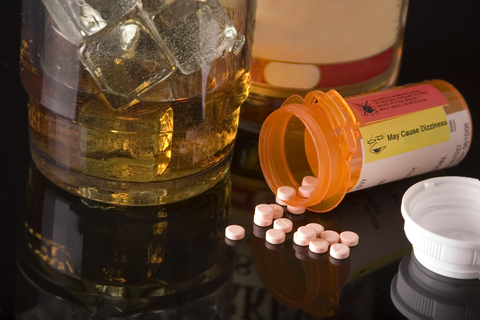
Cold and flu season is upon us. Pharmacies and doctors’ offices alike are filled with people picking up antibiotic prescriptions and over-the-counter products to fight their symptoms. However, a cough or cold won’t always stop someone from going out with friends or family for dinner and drinks. Unfortunately, mixing alcohol and medications can be harmful and dangerous.

Complications caused by drinking-and-drug interactions sent 524,000 Americans to hospital emergency rooms in 2008 alone for treatment (View Source). As a server or bartender it’s not only important to be aware of the risks associated with mixing drugs and alcohol, but also how to spot this risky behavior in your bar and restaurant patrons.

Medications used to treat allergies such as Benadryl and other antihistamines can cause drowsiness, clumsiness or lightheadedness. One should be aware that mixing antihistamines with a few drinks can greatly increase these effects and make it dangerous for driving and may cause the patron to show signs of intoxication much quicker, which could result in disturbances, undesirable behavior or fights.

Over-the-counter (OTC) drugs aren’t the only drugs that can have risky interactions with alcohol. The same holds true for a multitude of prescription drugs including antibiotics, anticoagulants and antidepressants. Effects can range from headache and vomiting to lasting results such as liver damage and risk of overdose.

As a bartender or server, there are a few easy steps you can take in your establishment to help protect against potentially disastrous outcomes associated with drug and alcohol interactions. Every medicine is different, and while only a doctor or pharmacist can definitively gauge the risks and possible interactions in any one individual, there are certain things you should watch for to spot any patrons who may be dangerously mixing medications and alcohol.

  • Keep an eye out for any patrons who are displaying cold symptoms such as coughing, sneezing, or watery eyes. If you notice someone that sounds congested, you can approach them in a conversational way to find out if they are taking something for their cold or flu. You might say something like, “It sounds like you are feeling under the weather. Everyone at my house has been fighting something lately. Have you been sick for a while?” Or maybe, “So, it’s just starting, huh? We’ve been going through the medicine at our house to find something that works. Have you been taking anything for your symptoms?”
  • If the patron is willing to engage in conversation, you could casually remind them that some cough and cold medicines can interact with alcohol, and that they should read the packaging on their medicine to check for any warnings. One example would be, “How is that Dayquil working for you? I might try that next time I get sick, does the packaging list any side effects to mixing it with alcohol? I sometimes have a glass or two of wine with dinner and like to make sure there is no risk in mixing the two.” This may spur the patron to think about how their own alcohol intake can be effected by their medication – sometimes a friendly reminder is all it takes.
  • While every drug is different, warning labels on many common OTC medications indicate that side effects can occur if one ingests 2-3 alcoholic beverages a day with medicines. As such, watch your customers and keep track of any excessive drinking (in this case, more than one or two drinks) if you know or suspect they are mixing. You should encourage your customer to eat, bring them a glass of water with their alcoholic beverages, and maybe suggest a low or no-alcoholic beverage instead.
  • If you suspect that your patron may have mixed medications to the point of concern or possible interaction, you should treat them just as you would with someone who has had too much to drink. Alert your manager or supervisor so that they can intervene if necessary.
  • If your customer moves into the ‘danger zone’ and you need to stop alcohol service, remain calm and express concern for their safety when letting them know you need to cut them off.
  • Offer to call them a cab if they appear to be drowsy, unfocused or clumsy in their movements. A person in this state is in no condition to get behind the wheel of a car. Read more about you right and obligation given a certain set of circumstances to serve/sell or not to serve/sell in our blog post, “Are You Committed to Public Safety?”

Alcohol and drug interactions are a risky business that can easily be avoided with a little bit of knowledge and forward thinking. Protect yourself by using common sense and reading labels the next time you drink, and share that message with those around you.

Resources:

What situations have caused you alcohol-drug interactions have you witnessed and how did you intervene?

© 2011 National Hospitality Institute®, TAM® of Nevada
Are You Concerned About Recent Rash of Casino Robberies?


Liz Benston with the Las Vegas Sun recently wrote an article on one of the more unbelievable stories to come out of Las Vegas in the last year. Las Vegas’ Bellagio casino was recently the site of a less than thrilling, but very costly, heist. A thief in a motorcycle helmet made off with a whopping 1.5 million in casino chips as a result of what some describe as lax security procedures within the casino.

For all of the high-tech gadgets and security features you’ll find in Vegas, there is surprisingly no law in Nevada requiring that a guard be stationed at all entrances.

There were ten armed casino robberies in the Las Vegas Valley in 2010. Do you think casinos should be doing more to stop this from happening again in the future? To read more on this story, check out Liz Benston’s article about how slack security can cost Las Vegas casinos.

© 2011 National Hospitality Institute®, TAM® of Nevada 
Did You Know That In Nevada Alcohol Education Cards Expire After Four Years?

Over 200,000 hospitality and service workers are employed in Clark County, most whom are required, by state law, to receive Alcoholic Beverage Awareness Training and carry an Alcohol Education Card. The Alcoholic Beverage Awareness Training Program is required for those who serve/sell alcoholic beverages or provide security services in casinos, restaurants, bars, clubs, and grocery/convenience stores in Clark and Washoe County. Many establishments also require anyone who handles alcoholic beverages and their managers and executive staff to carry cards.

The State of Nevada passed a law on July 1, 2007 which requires card holders to renew their training and be issued a new card every four years or four years from the date of issuance (testing). Thousands of cards have been issued over the years in the State of Nevada and may have invalid expiration dates from a former Clark County law that required training and card renewal every five years. 

Therefore, anyone who works in the industry and carries an Alcohol Education Card for their job should check the date that their card was issued. Cards issued by approved providers in 2005, 2006, and the first half of 2007 are either already expired and need to be renewed or will be up for renewal sooner than the expiration date that is shown on the card.  If it’s been more than four years, then it is time to take the training again and get a new card.

Important points as you consider how this information affects you:

  • Providers of the Alcoholic Beverage Awareness Training program and Alcohol Education Cards must be approved through Nevada’s Commission on Postsecondary Education. Cards issued by providers and provider locations not on the approved provider list could be deemed invalid.
  • If an auditor asks to see your card and it is expired, your employer (the licensee) could end up facing civil fines ranging from $500 to $5000 depending on the number of infractions. Your employer could fire you for not having a valid Alcohol Education Card. Keep in good standing with your employer and avoid potential job loss by making sure that your card is valid and up-to-date.
  • Training can be taken online if the provider has an approved online program.
  • All students must physically go to the provider’s approved school location to take an exam that is proctored and pass the proctored exam with a score of at least 75%.
  • Some employers have preferred providers that offer corporate discounts. Check with your employer before you register.
  • The program must be approved by the Commission on Postsecondary Education and should be no less than 3½ hours in duration, covering topics as specified for the approved program.

Applicable laws and sources of information can be found through the following URLs:

© 2010 National Hospitality Institute®, TAM® of Nevada