
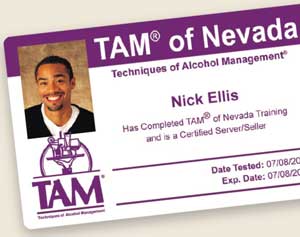
Need a TAM® Card for the Busy Summer Season? A Rundown on Requirements

As a reminder to anyone selling or serving alcoholic beverages in Southern Nevada, you will need to obtain an alcohol awareness card if you haven’t already. Students often ask for a list of requirements and things to remember prior to taking a TAM® Class with us. Please use the following information as a “cheat sheet” of TAM Card requirements, and pass on to anyone you know who may benefit from this information.

  1. TAM® Cards are required for anyone selling or serving alcoholic beverages in Southern Nevada. This includes servers, bartenders, security professionals at establishments that sell alcoholic beverages, clerks at grocery and convenience stores who sell alcoholic beverage products, and more (Nevada Revised Statutes). Additionally, TAM Cards ARE required for anyone selling or serving alcoholic beverages for any length of time, including special one-time events. We often receive calls asking if TAM® Cards are needed for individuals who will be working to sell or serve alcoholic beverages for festivals, special weekend events, and similar situations. Even if you will only be working in this type of position for a short period of time, a TAM® Card is still mandatory.
  2. You must be 16 years of age or older to obtain a TAM Card. Read more about age requirements in our blog post, “TAM Cards for Teens.” Remember, you must be 21 years of age or older to serve or sell open alcoholic beverages, but teenagers and young adults who work as cashiers or clerks at grocery or convenience stores that sell sealed alcoholic beverages may need to obtain alcohol awareness training.
  3. You must present valid picture ID when attending a TAM® Class or sitting for a proctored exam. When you come to the TAM® Training Center for your TAM® Class, or to complete your exam if you took the online course, remember to bring a valid form of identification. Examples of valid ID include a driver license, passport, or state identification card. Please check the TAM® of Nevada website for a complete list of accepted forms of ID.
  4. Classroom training is NOT required; you can take your alcohol awareness course online. TAM® of Nevada offers classes both online or onsite. The choice is yours on which option fits best with your lifestyle and schedule. You’ll receive the same great training and a valid TAM® Card with either option.
  5. Online or in the classroom, plan on dedicating about 3 hours to your alcohol awareness training. State law requires that each student receives robust training following specific topics and curriculum, so plan to spend about three hours in your online or on-site training program followed by a short exam. Contrary to popular belief, there is no such thing as a “shorter” class for students who need to renew their alcohol education cards. State law mandates that students must complete the entire program every four years to remain in compliance.

Hopefully this clears up any questions about TAM Card requirements. Sign up for one of our classes at TAM of Nevada’s website. We look forward to seeing you soon!

Resources

© 2012 National Hospitality Institute®, TAM® of Nevada
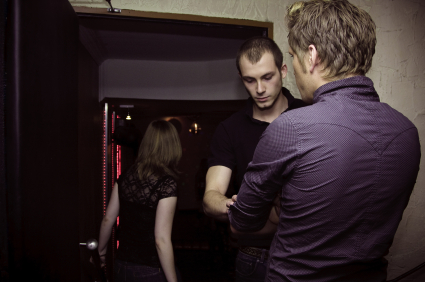
ID Scanners – Another Weapon to Combat Underage Drinking

Routine decoy operations are continuing across the state of Nevada from Reno to Henderson, and establishments and business owners are taking note. As we reported in a recent blog post, “The City of Reno Has Suspended Alcohol Licenses for Several Businesses for Selling Alcohol to Minors,” businesses and hospitality professionals should always remain alert and focused when selling or serving alcoholic beverages. Is your staff prepared to pass with flying colors if they are approached by undercover officers conducting an alcohol compliance check? With continued efforts across the state of Nevada to cut down on teenage drinking, alcohol sales professionals can count on a variety of tactics to ensure they are doing their best to make responsible alcohol sales.

The first defense for sales professionals is a thorough knowledge of local and state laws, and mandatory alcohol awareness training. Alcohol awareness training from TAM of Nevada will teach you how to spot fake, altered and borrowed identification, which is popular with teen drinkers. Also remember that TAM® Cards expire after four years, contact TAM® of Nevada if you need to renew your training. Officials may ask to see your alcohol awareness card during an alcohol compliance check.

Some companies, such as 7-11, are also implementing additional procedures to ensure they are making safe and legal alcoholic beverage sales. As reported by KRNV Reno, 7-11 recently installed ID scanners at all of their store locations across Nevada (KRNV Reno). Hopefully, additional safeguards such as ID scanners will deter teens from attempting to purchase alcoholic beverages altogether. ID scanners can be helpful in determining whether an ID is the real deal, and some can also quickly do the math for determining the age of the person represented by the ID. Remember, anyone selling or serving alcoholic beverages needs to confirm that the person represented by the ID is in fact the person standing in front of them. 7-11 notes that their staff is not relying on scanners alone. Staff members continue to follow company procedure in using the skills garnered during alcohol awareness training to ensure that customers are using legitimate identification that belongs to them. For more information about ID scanners, check out our blog post, “ID Scanners – Friend or Foe?

What are your experiences regarding the use of ID scanners?

Resources

© 2012 National Hospitality Institute®, TAM® of Nevada
Attempted Robbery Foiled at the Bellagio

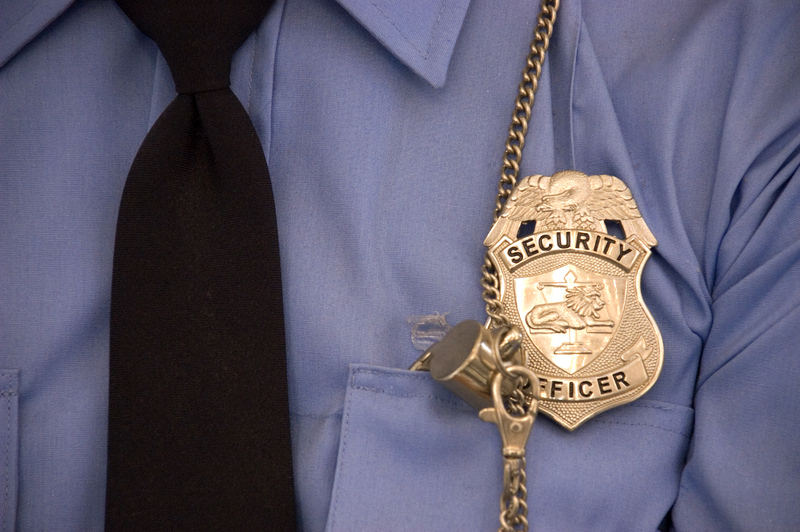
Jackie Valley of the Las Vegas Sun recently wrote an article outlining an attempted robbery at the Bellagio Casino last Saturday night. Two men entered the casino on Saturday evening and proceeded to the table games area. Both men were disguised with wigs and sunglasses, and attempted to use pepper spray to disable a dealer and other gamblers, and make off with over $100,000 in casino chips. Needless to say, the robbery attempt was foiled by Bellagio employees, security guards stepped in, and one alleged robber was arrested, the other is still at large. According to Metro Police, there is an ongoing investigation into the events of the evening and any other suspects involved. To read more about the events of the evening, check out the article, “Police: Bellagio Employees Foil Robbery on Casino Floor.”

As you may remember, the Bellagio was also the site of another infamous attempted robbery back in 2010 which was outlined in our blog post, “Are You Concerned About Recent Rash of Casino Robberies?” These events should serve as a reminder to casino employees and hospitality workers to always remain vigilant on the job and report any suspicious behavior to a manager or supervisor. As a security guard or casino floor employee, one has to be aware of their surroundings at all times. The job at hand is to maintain the safety and security of the staff and patrons of an establishment, and to diffuse any potentially hazardous or disruptive situation before it can happen. However, one should also be aware that it’s not just cheaters and thieves that need to be managed in a casino setting; security professional needs to be on the lookout for disruptive patrons, rowdy drunks, and even dishonest employees. Casino and hospitality professionals should refer to both their TAM® training and any additional company policies as they relate to guest safety and security.

What types of scams or suspicious behavior have you witnessed while working as a security guard? What, if anything, do you think casinos could be doing more to stop this from happening again in the future?

Resources

© 2012 National Hospitality Institute®, TAM® of Nevada

 

A Growing Trend – Teens Drinking Hand Sanitizer

There is an alarming new trend cropping up among young people across the country. Teens looking for a quick buzz are turning to internet videos and gossip from friends to learn about ways to distill and consume the alcohol in hand sanitizer products. Many teens take on the attitude that they are young and invincible, nothing bad will happen to them. Unfortunately, with risky behavior such at this, hospitals are seeing an increase in the number of young people being treated for alcohol poisoning, and doctors are concerned this may become a growing, and dangerous fad.

Liquid hand sanitizer is the latest in a string of household products groups of teens are using to get drunk, and it has public health officials and parents concerned. A few squirts of hand sanitizer could equal a couple of shots of hard liquor. Liquid hand sanitizer is 62-65% ethyl alcohol, or ethanol, the main ingredient in beer, wine and spirits, making it 120-proof. To compare, a bottle of vodka is 80-proof (ABC News). With recent reports indicating that more than 50% of of 18-20 year olds in Nevada have engaged in underage drinking within the past month, this is definitely a trend that health officials, parents, and servers and sellers of alcohol should be aware of the dangers of, and working to spread the word about (SAMHSA).

Hand sanitizer isn’t the only over the counter product that can be dangerous when used incorrectly. Common over-the-counter drugs can contain up to 10% alcohol. Cough syrup and laxatives may have some of the highest alcohol concentrations, and are readily available to young people (NIAAA). Some pharmacies and retailers have moved select cough suppressants and other drugs behind the counter, but retailers should remain vigilant about responsible sales of both alcohol and over the counter medications and always follow company policies and procedures, and local and state laws, for such sales.

Also keep in mind, that teens aren’t the only group that is susceptible to risky behaviors with over-the-counter and household products. Alcohol and drug interactions are another common problem to be aware of, and customers could inadvertently be at risk for adverse effects. Make sure to read our blog post, “Risky Business – How to Spot & Deal with Alcohol-Drug Interactions,” for more information on how to handle such situations.

Resources

© 2012 National Hospitality Institute®, TAM® of Nevada